Contents · 9 sections
In short: the Swedish Civil Contingencies Agency (MCF, formerly MSB) writes that LPG cylinders in caravans, motorhomes and boats should be stored upright in a separate compartment that is ventilated to the open air — in practice an LPG locker with a ventilation opening at the bottom, because LPG is heavier than air. MCF phrases the leak test as advice: “Get into the habit of checking the tightness of your LPG system when you change the cylinder, or at least every other year.” MCF does not set special requirements for how the fixed installation in a vehicle is to be carried out, but have a qualified person who works with motorhome LPG do or check it. An LPG check is no longer part of the compulsory periodic inspection, but many inspection companies offer it. An LPG alarm and a carbon monoxide alarm in the living area are an inexpensive safeguard.
“Does the LPG cylinder have to stand in a sealed locker?” is a question that comes up often in camper groups, often together with questions about carbon monoxide. Here we go through what applies to LPG (gasol, typically propane) in a campervan, how an LPG locker should be built, and how you check the system. LPG is one of several ways to cook and heat; for heating, see also diesel heaters.
The essentials at a glance
- The cylinder stands upright and is strapped in its own locker.
- The locker is sealed against the living area and ventilated to the open air at the bottom.
- A leak test when you change the cylinder, and at least every other year (many people do it every year).
- Replace hoses that have dry cracks, and use only hose intended for LPG.
- Ventilation in the living area that cannot be closed.
- An LPG alarm near the floor, and a carbon monoxide alarm in the living area.
Why LPG is special
LPG is heavier than air. If it leaks, it collects at the floor and in low points, where it can be ignited by a spark. That is why the ventilation from the LPG locker must sit at the very bottom and lead out under the vehicle. Combustion uses up oxygen and produces carbon dioxide and water vapour, and in poor combustion also carbon monoxide. That is why ventilation is needed in the living area when a hob or a heater is in use.
How the LPG locker should be
- Separate and sealed against the living area, so that leaking gas cannot enter where you live.
- Ventilated to the open air with an opening in the floor or at the lower edge, which cannot become blocked.
- The cylinder stands upright and is strapped so that it cannot move under braking or in a crash.
- Accessible from outside, or easy to reach, so that you can close the cylinder valve quickly.
- Nothing else in the locker that can damage hoses and valves while driving.
- A sign at the LPG locker showing that there are LPG cylinders there can make it easier for the fire service in a fire. It is not a requirement for vehicles, but a simple way to make the locker obvious.
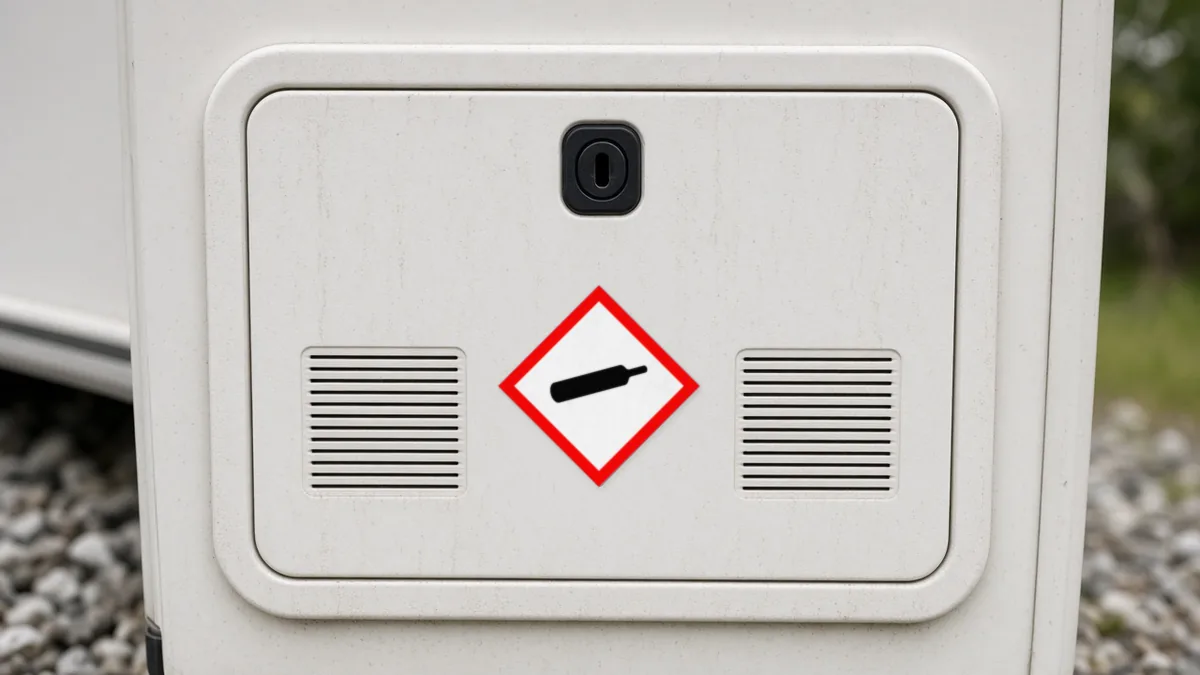
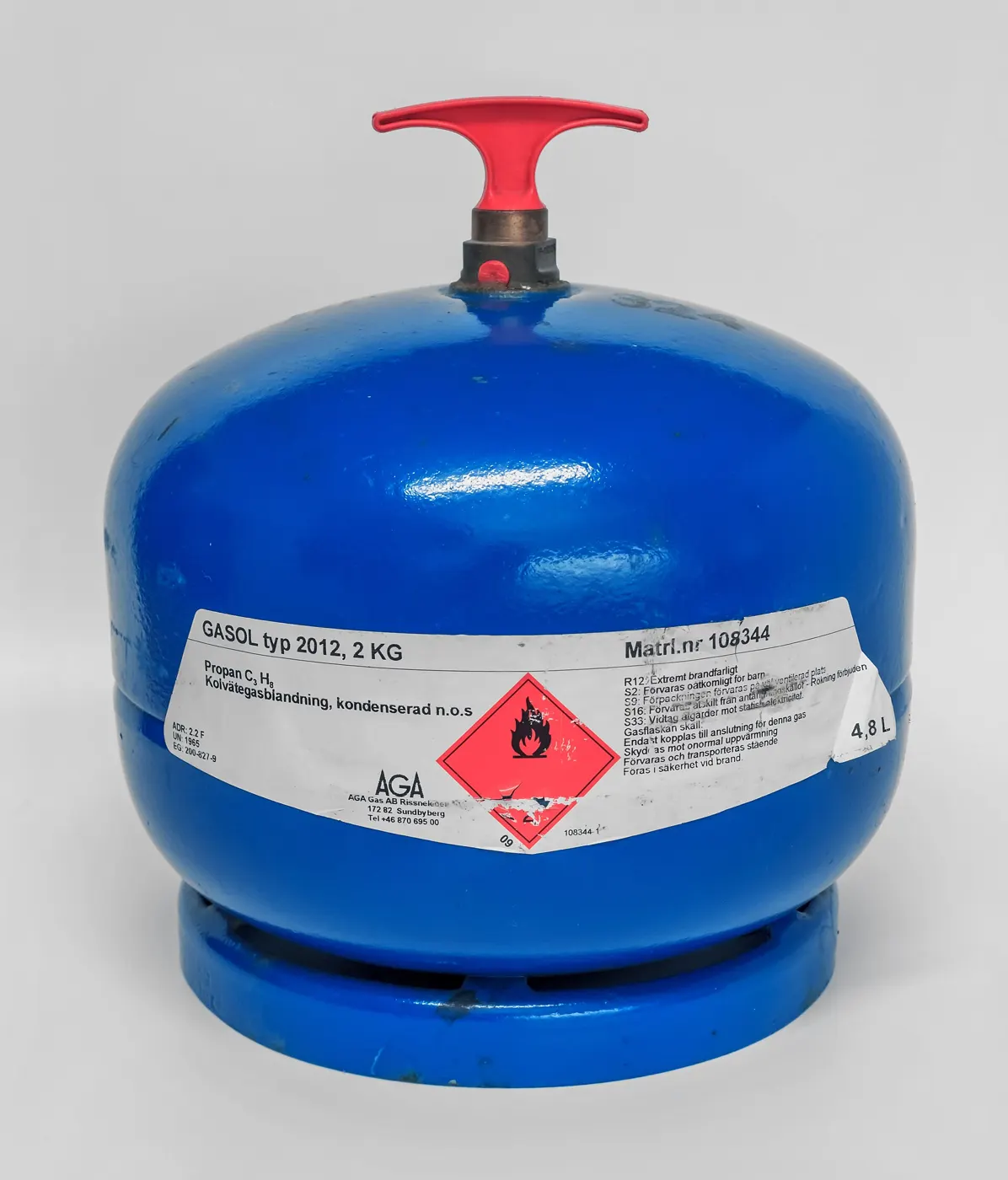
Warning. Never store LPG cylinders loose in the living area, not even empty ones. Close the cylinder valve while driving unless your installation has equipment approved for use on the move.
Installation and the rules
The Swedish Civil Contingencies Agency (MCF, formerly MSB) gives, on the page LPG in caravans and motorhomes, advice on storage and leak testing. MCF writes: “At the periodic inspection of your caravan or motorhome there is often an opportunity to have the tightness of the LPG system checked at most inspection companies. There you can also get more detailed information about leak testing and the installation.” For motorhomes and caravans there is a European standard for LPG installations (EN 1949). Have a qualified person who works with motorhome LPG carry out or check the fixed installation, and keep the documentation for the registration inspection. The requirement for permanently fitted cooking equipment (passenger car class 2) is described in the re-registration guide. Use appliances intended for vehicles, with a flame failure device.
Until 2009 an LPG check was compulsory at the inspection of a motorhome or caravan. Today it is voluntary, but many inspection stations offer it as an add-on service. More about what is checked at inspection is in the rules guide.
Leak testing
MCF writes: “Get into the habit of checking the tightness of your LPG system when you change the cylinder, or at least every other year.” According to MCF there is often an opportunity to have the tightness checked at most inspection companies in connection with the periodic inspection. You can also do it yourself:
- Leak indicator: fitted at the regulator and shows if gas is flowing when all appliances are off.
- Leak spray or soapy water: brush it onto joints and connections. Bubbles mean a leak.
- Hoses: bend the hose before each season. If cracks are visible it must be replaced.
- The gasket in the regulator’s connection to the cylinder must be intact.
If you find a leak: close the cylinder valve, ventilate, and do not use the system until the fault has been put right and tightness has been tested again. Never look for leaks with an open flame.
LPG alarms and carbon monoxide alarms
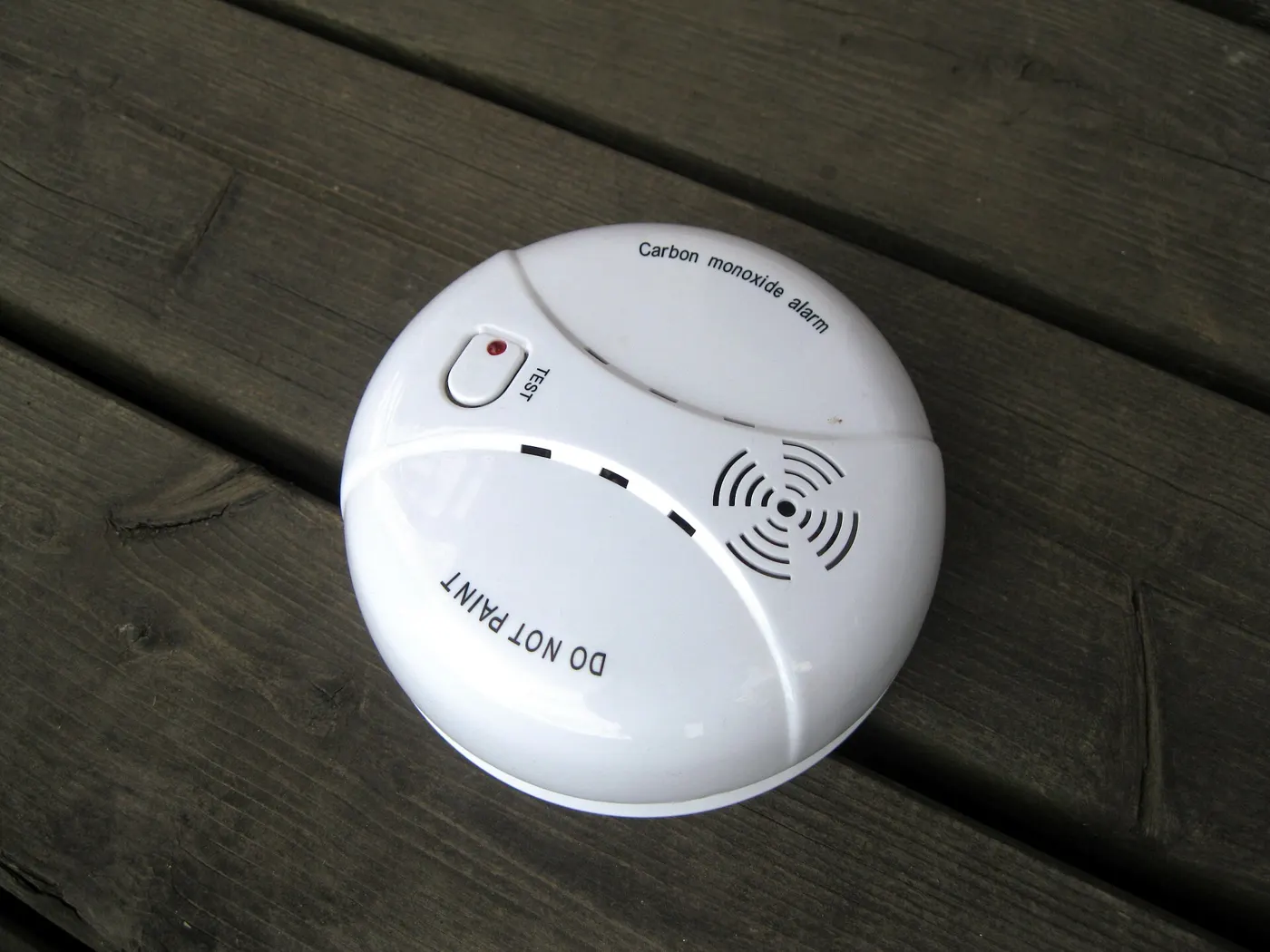
An LPG alarm is placed low, because LPG sinks. A carbon monoxide alarm warns of carbon monoxide from poor combustion, a defective heater or exhaust gases from outside, and is placed in the living area according to the manufacturer’s instructions. Test both regularly and replace them when their life has expired. Also have a fire extinguisher and a fire blanket near the exit.
Ventilation in the living area
A living area with an LPG hob or an LPG heater needs ventilation that cannot be closed: an opening high up, for example in a roof vent, and one low down. Never block the vents to keep the heat in. More on ventilation and damp is in the guide to insulation and condensation.
Work it out yourself: the LPG calculator shows how long the cylinder will last.
Frequently asked questions
Does the LPG cylinder have to stand in a sealed locker?
Yes. According to MCF, LPG cylinders should be stored upright in a separate compartment that is ventilated to the open air, with the opening at the bottom because LPG is heavier than air. The compartment should also be sealed against the living area.
Is an LPG check compulsory?
No, not since 2009. It is voluntary but recommended, and many inspection stations offer it. You can also check tightness yourself with a leak indicator or leak spray.
Do I need a carbon monoxide alarm in the campervan?
It is strongly recommended if you have LPG or a fuel-fired heater. Carbon monoxide is odourless and can be deadly.
How often should the LPG hose be replaced?
Check the hose before each season and replace it at once if it has cracks. Many manufacturers also state a maximum age; follow that.
Sources
- Swedish Civil Contingencies Agency (formerly MSB), LPG in caravans and motorhomes. A corresponding English page was not found; MCF’s English start page is available.
Last checked: November 2026. Always follow the manufacturer’s instructions for LPG appliances, the regulator and the alarms.
New checklists and guides, plus reminders before winter storage and inspection. A few emails a year, nothing more.
The content is based on my own experience and the rules that applied when the text was written. Rules can change, and I am not responsible for factual errors or rule changes that affect your build or maintenance. Read the full disclaimer.

Linus Thell
Founder of Camperliv.se. Works with vehicles every day and has spent many years working on cars.