Contents of the guide Show ▾
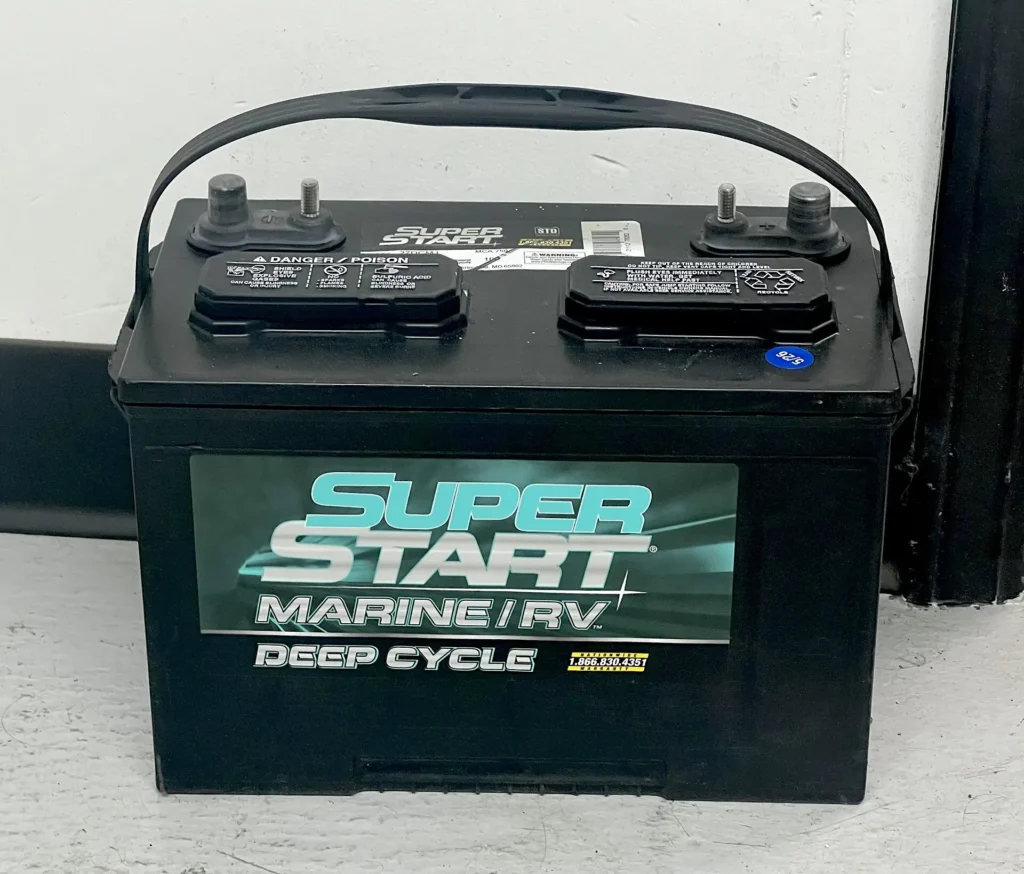
Quick answer When a motorhome battery keeps going flat, it is almost always down to one of three things: a load that draws current while the van is parked (parasitic drain), a charging source that is not working, or a battery that is worn out and has lost capacity. Troubleshoot in that order: measure the resting current, check that charge is actually reaching the battery, and test the battery. Start by finding out which battery is going flat, the starter battery or the leisure battery, because the causes differ.
This guide is for anyone with a motorhome or campervan who wants to understand the fault before taking the vehicle in. You can do 12 volt work yourself with a simple multimeter, but be careful: batteries can deliver a very high short-circuit current.
Checklist as PDF: Electrical system checklist (in Swedish). All checklists
The essentials at a glance
- Find out which battery is going flat: starter or leisure.
- Measure the resting voltage after the battery has rested for a few hours.
- Measure the parasitic drain with a multimeter in series with the negative cable.
- Check charging while driving, and from solar and mains hook-up.
- Test the battery with a battery tester. A worn battery can show a good voltage but have little capacity.
Step 1: which battery is going flat?
| Symptom | Likely battery | Common causes |
|---|---|---|
| The van won’t start, the living area works | Starter battery | Parasitic drain, long storage, old battery, wrongly wired split-charge relay |
| The living area goes dead, the van starts | Leisure battery | Consumption too high, not charging while driving, worn battery |
| Both are flat | Both | The batteries are linked (relay or B2B stuck), or a large load left on |
Step 2: measure the resting voltage
Let the battery rest for a few hours without charging or loads, ideally overnight, and measure the voltage directly at the terminals. For a lead-acid battery (AGM, gel, flooded), the resting voltage gives a rough idea of the state of charge. For lithium batteries the voltage tells you less, because the curve is very flat. There, the battery monitor or the battery’s own BMS is better.
| Resting voltage, lead-acid battery (approximate) | Meaning |
|---|---|
| About 12.7 V or more | Fully charged |
| About 12.4 V | Roughly half charged |
| Below about 12.0 V | Deeply discharged, charge it now |
The values are guide values and vary with battery type and temperature. Check the manufacturer’s data sheet for your battery.
Step 3: measure the parasitic drain
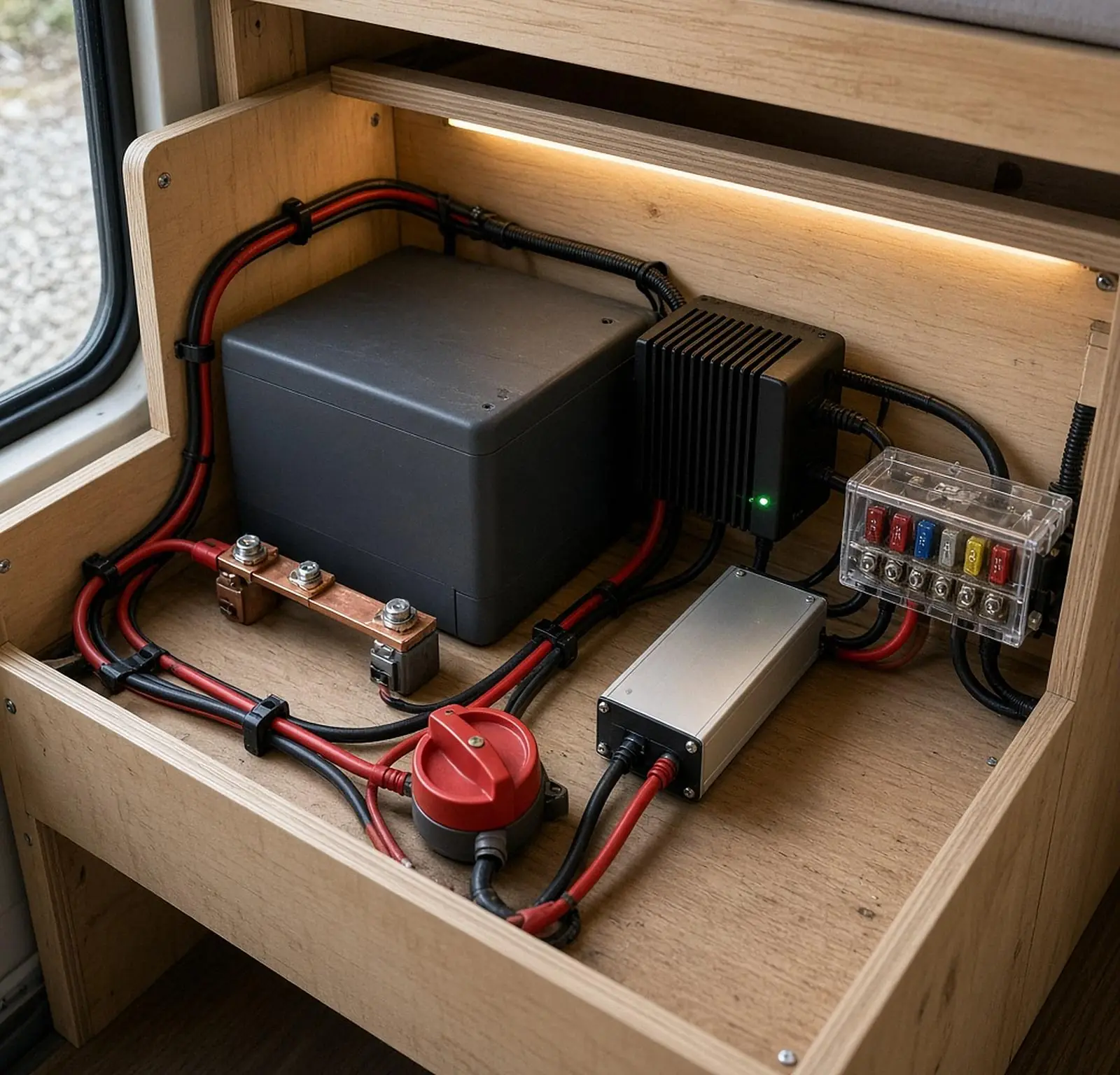
Parasitic drain is the current that flows when everything is switched off: alarm, clock, radio, control units, remote locking, USB sockets, LPG alarm, solar controller and battery monitors. A small drain is enough to empty a battery over several weeks of storage.
- Switch everything off, lock the vehicle and wait until the control units have gone to sleep. On modern vehicles this can take a while; follow the vehicle maker’s service manual.
- Set the multimeter to amps (DC) and connect it in series between the battery’s negative terminal and the negative cable. A DC clamp meter is easier and safer.
- Read the current. If it is higher than what the manufacturer states as a normal resting current, remove one fuse at a time until the current drops.
- The fuse that makes the current drop tells you which circuit the fault is in.
Warning Never start the engine or switch on large loads with the multimeter in series. It can normally only handle a few amps, and the fuse in the meter blows, or in the worst case the meter itself. Never disconnect the negative cable on a modern vehicle without knowing how the vehicle reacts; some systems have to be recalibrated.
Step 4: check the charging
While driving
Measure the voltage across the leisure battery with the engine running. If it does not rise noticeably compared with the resting voltage, no charge is getting through. Common causes: a blown fuse, a poor cable lug, a split-charge relay that does not engage or a smart alternator that lowers the voltage. On modern vehicles the solution is often a B2B charger.
Solar
Check the controller’s display or app in daylight. If it shows no panel voltage, look for loose connectors and blown fuses between the panel and the controller. Read more in the solar guide.
Mains hook-up
Check that the charger is getting 230 volts, that the RCD has not tripped and that the charger is set to the right battery type.
Step 5: test the battery
A worn battery can show a normal voltage but lose it quickly under load. A battery tester measures the battery’s ability to deliver current and gives a better picture than an ordinary voltmeter. Many garages and battery shops can test the battery for you. Batteries age even when they are not used, and a lead-acid battery that has been left deeply discharged for a long time often suffers permanent damage.
After the winter: the motorhome won’t start
The most common reason a motorhome will not start after winter storage is a flat starter battery. Charge it with a battery charger, let it rest and test it. If it goes flat again during storage, it is time to measure the parasitic drain. Next winter: keep it on a maintenance charge or disconnect the battery according to the vehicle’s instructions; see the service plan (in Swedish).
Quick troubleshooting
- Which battery is flat?
- Resting voltage after a few hours’ rest.
- Parasitic drain with everything switched off.
- Charging voltage with the engine running.
- Status of the solar controller.
- Mains charger and RCD.
- Battery test under load.
- Fuses and cable lugs: warm, loose or corroded?
Common causes in a campervan
| Cause | How it shows | What to do |
|---|---|---|
| Fridge or compressor fridge left on during storage | The leisure battery is empty after a few days | Switch it off or use the main switch |
| Split-charge relay stuck | Both batteries flat at the same time | Check the relay or switch to a B2B charger |
| Retrofitted radio, alarm or tracker | The starter battery slowly loses charge | Measure parasitic drain; connect via the correct fuse |
| Corroded or loose cable lugs | Charging works only sometimes | Clean, re-crimp and tighten |
| Wrong charging profile for the battery type | The battery never gets full, or loses capacity | Set the right profile in the charger and controller |
| Short trips | The battery does not recharge between stops | Longer drives, a B2B charger or charging on mains hook-up |
Specifically for lithium batteries
A lithium battery has a built-in BMS (battery management system) that can shut the battery off at too low a voltage, too high a current or in the cold. The battery then seems dead even though it is not damaged. Check the battery’s app or display if it has one, and read the manufacturer’s instructions for how to reactivate the battery. Never charge a lithium battery below 0 °C (32 °F) unless the manufacturer explicitly allows it. More in lithium or AGM in a motorhome.
Preventing a flat battery
- Fit a main switch for the living area and use it during storage.
- Use a battery monitor to see real-world consumption.
- Keep the battery on a maintenance charge during long storage, on mains hook-up or with a solar panel.
- Check fuses and cable lugs every year.
- Replace the battery in good time. An old battery tends to fail first when it is cold.
Converting a van with its own electrical system? Read about how to re-register a van as a motorhome (Swedish rules).
Frequently asked questions
Why does the starter battery in my motorhome go flat?
Usually parasitic drain from an alarm, control units or accessories during long storage, or an old battery. Measure the parasitic drain and test the battery.
Why doesn’t the leisure battery charge while driving?
Most often a smart alternator without a B2B charger, a blown fuse or a split-charge relay that does not engage.
How do you measure parasitic drain?
With a multimeter in series with the battery’s negative cable, or more easily with a DC clamp meter, once the vehicle has gone to sleep.
Can a battery be damaged by being left flat?
Yes. A lead-acid battery left deeply discharged often suffers permanent damage, and in the cold a flat battery can freeze.
What do I do if the motorhome won’t start after the winter?
Charge the starter battery, let it rest and test it. If it goes flat again, measure the parasitic drain or have a garage find the fault.
Sources and further reading
- Victron Energy, Orion-Tr Smart: charging with a smart alternator
- Camperliv, Campervan electrical system: the 12V guide
Last checked: October 2026.
New checklists and guides, plus reminders before winter storage and inspection. A few emails a year, nothing more.
The content is based on my own experience and the rules that applied when the text was written. Rules can change, and I am not responsible for factual errors or rule changes that affect your build or maintenance. Read the full disclaimer.

Linus Thell
Founder of Camperliv.se. Has worked with vehicles for essentially all of his adult life.
Read more about Linus →