Contents of the guide Show ▾
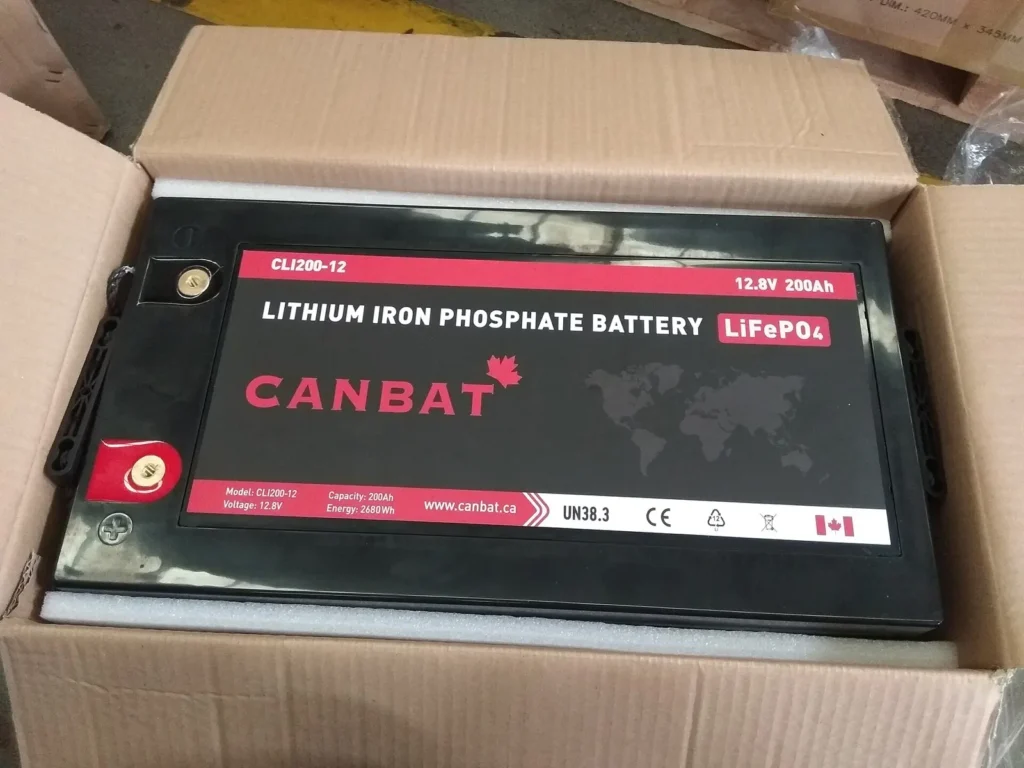
Quick answer Lithium (LiFePO4) weighs about half as much as AGM, lets you use almost all of its capacity and lasts many more charge cycles, but costs more and must not be charged in the cold. The limit is set by the manufacturer, often 0 °C (32 °F) and, for Victron for example, +5 °C (41 °F), unless the battery has heating. AGM is cheaper, copes better with charging in the cold and works with simpler chargers, but should not be discharged below about half. For anyone living in the vehicle or with high consumption, lithium is usually the better value over its lifetime.
The essentials at a glance
- Usable capacity: 100 Ah of lithium gives, in practice, close to twice as much energy as 100 Ah of AGM.
- Charging in the cold: LiFePO4 must not be charged below the manufacturer’s minimum charging temperature, which is often 0 °C (32 °F) and for some brands +5 °C (41 °F). The exception is batteries with built-in heating.
- The charger and solar controller must have the right charging profile for the battery type.
- Don’t just swap the battery. Check the B2B charger, mains charger, fuses and cables.
- Never mix lithium and AGM in the same battery bank.
Comparison
| AGM | Lithium (LiFePO4) | |
|---|---|---|
| Usable capacity | About 50% for a long life | About 80–100% |
| Weight for 100 Ah | About 25–30 kg (55–66 lb) | About 10–14 kg (22–31 lb) |
| Lifespan | A few hundred cycles with deep discharge | Several thousand cycles according to the manufacturers |
| Voltage during discharge | Falls gradually | Almost constant until the battery is nearly empty |
| Charging in the cold | Possible, with lower efficiency | Not below the manufacturer’s limit (often 0–5 °C / 32–41 °F) without battery heating |
| Charging current | Limited | Accepts high current, charges quickly |
| Price | Lower | Higher to buy, often lower per cycle |
Exact values are in the battery’s data sheet. The figures above are typical and differ between makes.
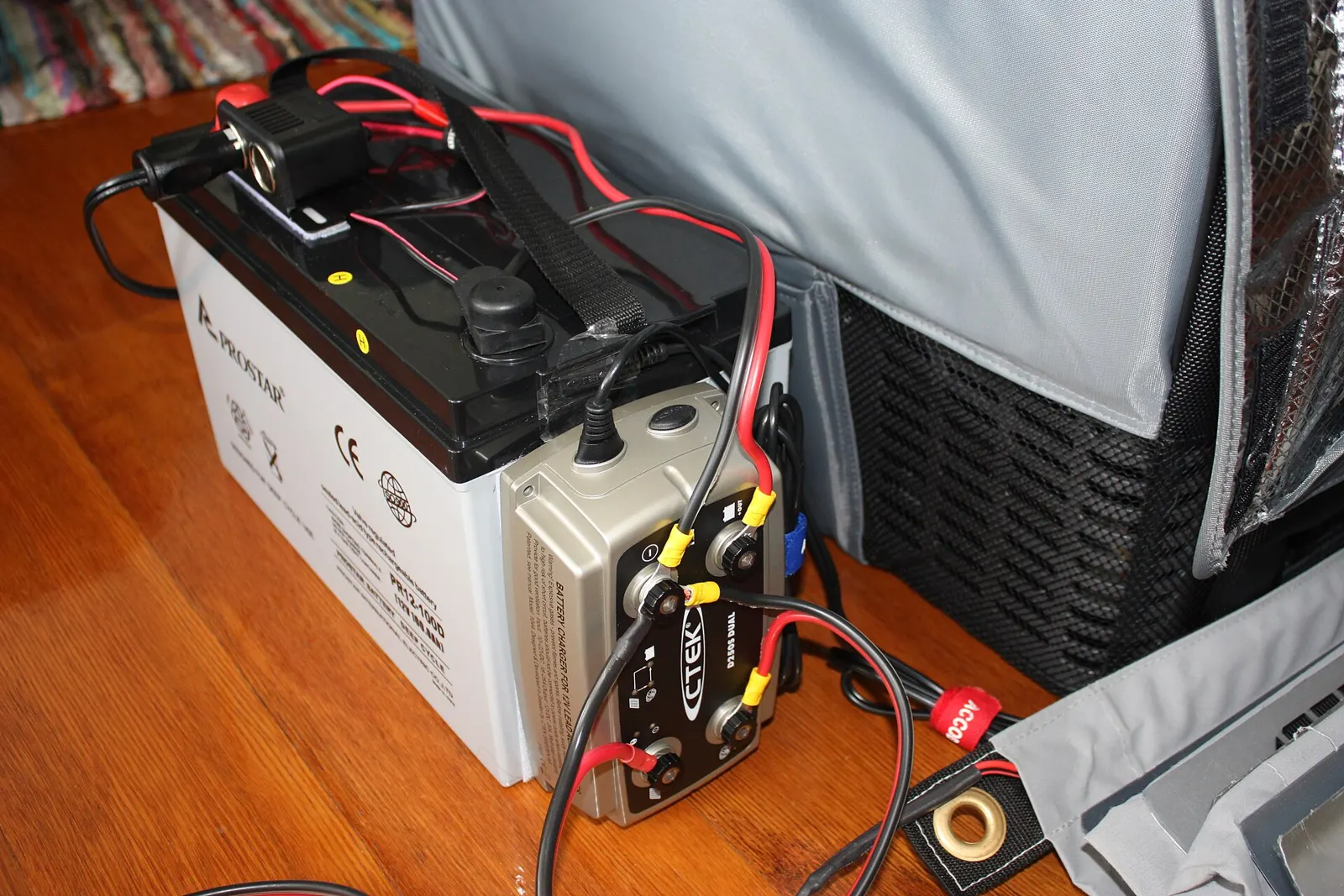
Switching from AGM to lithium: checklist
- Mains charger: should have a lithium profile. An AGM profile can charge incorrectly or float-charge unnecessarily.
- Charging from the alternator: a lithium battery can take so much current that the alternator and cables are overloaded. A B2B charger limits the current and is normally needed in modern vehicles with a smart alternator.
- Solar controller: set the lithium profile. See how much solar a motorhome needs and choosing an MPPT controller.
- Fuses: the main fuse must be able to handle the high short-circuit current a lithium battery can deliver. See cable sizes and fuses.
- Battery monitor or shunt that counts amp-hours. The voltage tells you little about the state of charge of a lithium battery.
- Position: indoors in the living area if you want to be able to charge in winter, strapped down so that it cannot move in a crash.
How big a battery?
Work out your consumption per day in amp-hours and how many days you want to manage without charging. With lithium you can use most of the capacity, with AGM about half. Use the electrical calculator to do the sums. If you have a compressor fridge and a diesel heater (in Swedish) in winter, consumption is clearly higher than in summer.
Lithium in winter
The battery’s BMS usually cuts off charging when it is too cold. Where the limit lies is stated in the battery’s data sheet. Victron, for example, gives charging from +5 °C (41 °F) and discharging down to −20 °C (−4 °F) for its Lithium Battery Smart. Also check whether the BMS has low-temperature protection that stops charging, and whether the battery has built-in heating. The protection safeguards the battery but means you get no charging at all until it warms up. Choose a battery with built-in heating if the vehicle is to be used in winter, or place it in the heated living area. If the vehicle stands unused over the winter: charge the battery to about half its capacity and cut the power with the main switch, following the manufacturer’s advice.
The battery is only part of the weight. More ideas are in 28 tips to save weight in a campervan and motorhome (in Swedish).
Work it out yourself: the DC-DC charge time calculator shows how long the B2B charger needs.
Building the electrics in your own campervan? Read about the rules for building a campervan (Swedish rules) before you start.
Frequently asked questions
Is lithium better than AGM in a motorhome?
For most people who use their vehicle a lot, yes: lower weight, more usable capacity and a longer life. AGM may be enough for someone who camps a few weekends a year and has low consumption.
Can a lithium battery be charged below freezing?
Not below the manufacturer’s minimum charging temperature. It is often 0 °C (32 °F), but for example +5 °C (41 °F) for the Victron Lithium Battery Smart. Check the battery’s data sheet and whether the BMS has low-temperature protection or heating. Otherwise choose a battery with built-in heating, or place it in the heated part of the vehicle.
Do I need a new charger if I switch to lithium?
Often. The charger, solar controller and B2B charger must have a lithium profile. Check your existing devices first.
Can you mix AGM and lithium?
Not in the same battery bank. The starter battery can, however, be an ordinary lead-acid or AGM battery while the leisure battery is lithium.
Sources and further reading
- The battery’s and charger’s data sheets (these take precedence over general values)
- Camperliv, Campervan electrical system
- Camperliv, Electrics and off-grid: all guides
Last checked: October 2026.
New checklists and guides, plus reminders before winter storage and inspection. A few emails a year, nothing more.
The content is based on my own experience and the rules that applied when the text was written. Rules can change, and I am not responsible for factual errors or rule changes that affect your build or maintenance. Read the full disclaimer.

Linus Thell
Founder of Camperliv.se. Has worked with vehicles for essentially all of his adult life.
Read more about Linus →