Contents of the guide Show ▾
Quick answer The cable size in a 12 V system is chosen by two things: how much current the cable has to carry and how long it is. At 12 volts the voltage drop quickly becomes large, so allow no more than about 3 percent drop (0.36 volts) for most loads. The fuse is there to protect the cable: it sits as close to the power source as possible and must never be larger than the cable can carry. The chart below gives a quick estimate, the cable size calculator works out the size, voltage drop and fuse for your particular circuit, and the electrical calculator helps you plan the whole system.
“What cable do I need for the fridge?” and “What size fuse for the LED lights?” are among the most common electrical questions in camper groups. Here is a chart to start from, the formula behind it and the rules for fuses. The basics of batteries and charging are in the guide to the campervan electrical system.
Checklist as PDF: Electrical system checklist (in Swedish). All checklists
The essentials at a glance
- Both the positive and negative cables count: measure the distance one way; the formula doubles it.
- No more than about 3 percent voltage drop for sensitive loads such as the fridge and pump.
- For charging circuits we play it safe: no more than 0.15 V drop at 12 V (0.3 V at 24 V) for B2B chargers, solar controllers and battery chargers, so that the charger reads the right voltage and charges fully.
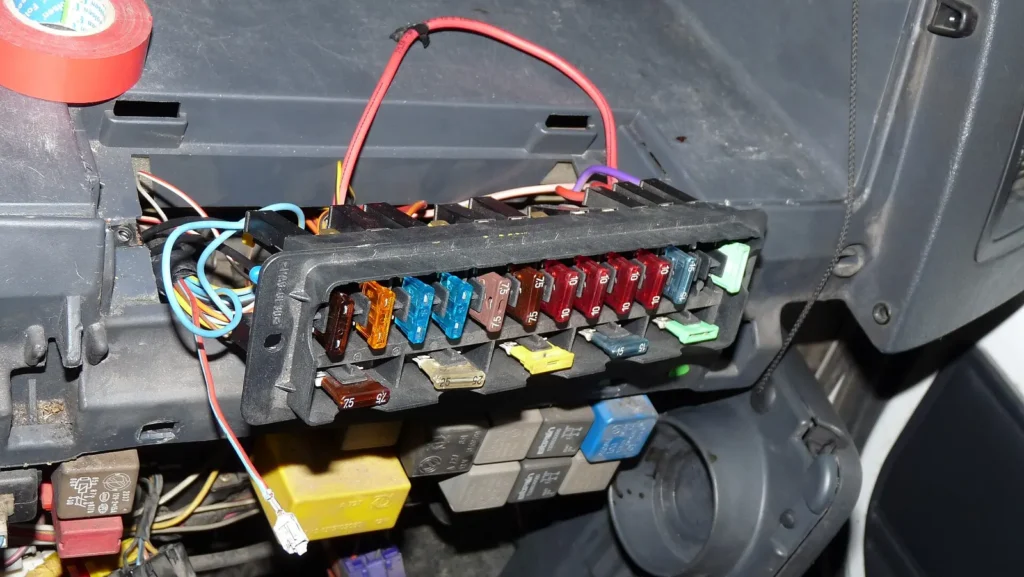
- The fuse protects the cable, not the appliance. It should sit close to the battery or the distribution point.
- The fuse must not be larger than the cable’s permitted current.
- If in doubt, choose one size too heavy rather than too thin.
Cable size chart for 12 V
The chart shows the minimum cable size in mm² for copper at 12 volts and no more than 3 percent voltage drop. The length is the distance one way from the battery or fuse box to the load. The values are also rounded up so that the cable can carry the current with a cautious margin. For charging circuits we recommend heavier cable than the chart (no more than 0.15 V drop); see the B2B charger example below and the cable size calculator.
| Current | 1 m (3 ft) | 2 m (6.5 ft) | 3 m (10 ft) | 5 m (16 ft) | 8 m (26 ft) |
|---|---|---|---|---|---|
| 5 A | 0.75 | 1 | 1.5 | 2.5 | 4 |
| 10 A | 1 | 2.5 | 4 | 6 | 10 |
| 15 A | 1.5 | 4 | 6 | 10 | 16 |
| 20 A | 2.5 | 4 | 6 | 10 | 16 |
| 30 A | 4 | 6 | 10 | 16 | 25 |
| 50 A | 10 | 10 | 16 | 25 | 50 |
| 80 A | 25 | 25 | 25 | 50 | 70 |
| 100 A | 25 | 25 | 35 | 50 | 95 |
| 150 A | 50 | 50 | 50 | 95 | 120 |
The chart is an estimate. The cable maker’s data always applies, and the permitted current depends on insulation, temperature and whether cables are bundled. If cables lie close together in a duct near heat sources, choose one size larger.
mm² and AWG
If you buy cable sold in AWG (American Wire Gauge), use the nearest size with at least the same copper area. Metric and AWG sizes do not match exactly, so round up, never down.
| mm² in the chart | Nearest AWG with at least the same area |
|---|---|
| 0.75 | 18 AWG |
| 1 | 16 AWG |
| 1.5 | 14 AWG |
| 2.5 | 12 AWG |
| 4 | 10 AWG |
| 6 | 8 AWG |
| 10 | 6 AWG |
| 16 | 4 AWG |
| 25 | 2 AWG |
| 35 | 1 AWG |
| 50 | 1/0 AWG |
| 70 | 3/0 AWG |
| 95 | 4/0 AWG |
| 120 | 250 kcmil |
How to calculate it yourself
The formula for the minimum cable size is:
Area (mm²) = 2 × length (m) × current (A) × 0.0175 ÷ permitted voltage drop (V)
0.0175 is the resistivity of copper in Ω·mm²/m, and the 2 stands for the positive and negative cables. Example: a compressor fridge draws 5 A and sits 4 metres (13 ft) from the fuse box. 2 × 4 × 5 × 0.0175 ÷ 0.36 = 1.9 mm². Choose the next standard size up, which is 2.5 mm² (12 AWG).
The formula uses metres. If you measure in feet, divide by 3.28 first.
Only know the power? Current (A) = power (W) ÷ voltage (V). A 60 W fridge therefore draws about 5 A at 12 volts.
Common loads
| Load | Typical current | Bear in mind |
|---|---|---|
| LED lighting | 0.1–1 A per string | Low current but often long cables. 1.5 mm² (14 AWG) is usually enough. |
| USB sockets | 2–5 A | Fast chargers for laptops draw more than ordinary USB sockets. |
| Compressor fridge | 4–6 A, higher at start-up | Sensitive to voltage drop. An undersized cable can make it switch off. |
| Water pump | 3–8 A | A short cable is usually enough, but check the pump’s start-up current. |
| Diesel heater | Often 8–10 A briefly at start-up, 1–2 A running | Size for the start-up current; see the diesel heater guide (in Swedish). |
| Inverter 1,000 W | About 90 A | Short, heavy cable straight from the battery, with its own fuse. |
The values are approximate. Always check the rating plate or the manual.
Fuses: size and position
- Main fuse as close to the battery’s positive terminal as possible, rated for the main cable.
- One fuse per branch in a fuse box, rated for that branch’s cable.
- Fuse rating: larger than the load’s normal current, but never larger than the cable can carry.
- Chargers and B2B chargers are fused according to the manufacturer’s manual, often on both sides. See B2B chargers.
- Solar panels are fused between the controller and the battery. See fitting solar panels.
Warning A lithium battery can deliver a very high short-circuit current. The main fuse must be able to break that current. Choose the fuse type according to the battery maker’s recommendation.
Installation that lasts
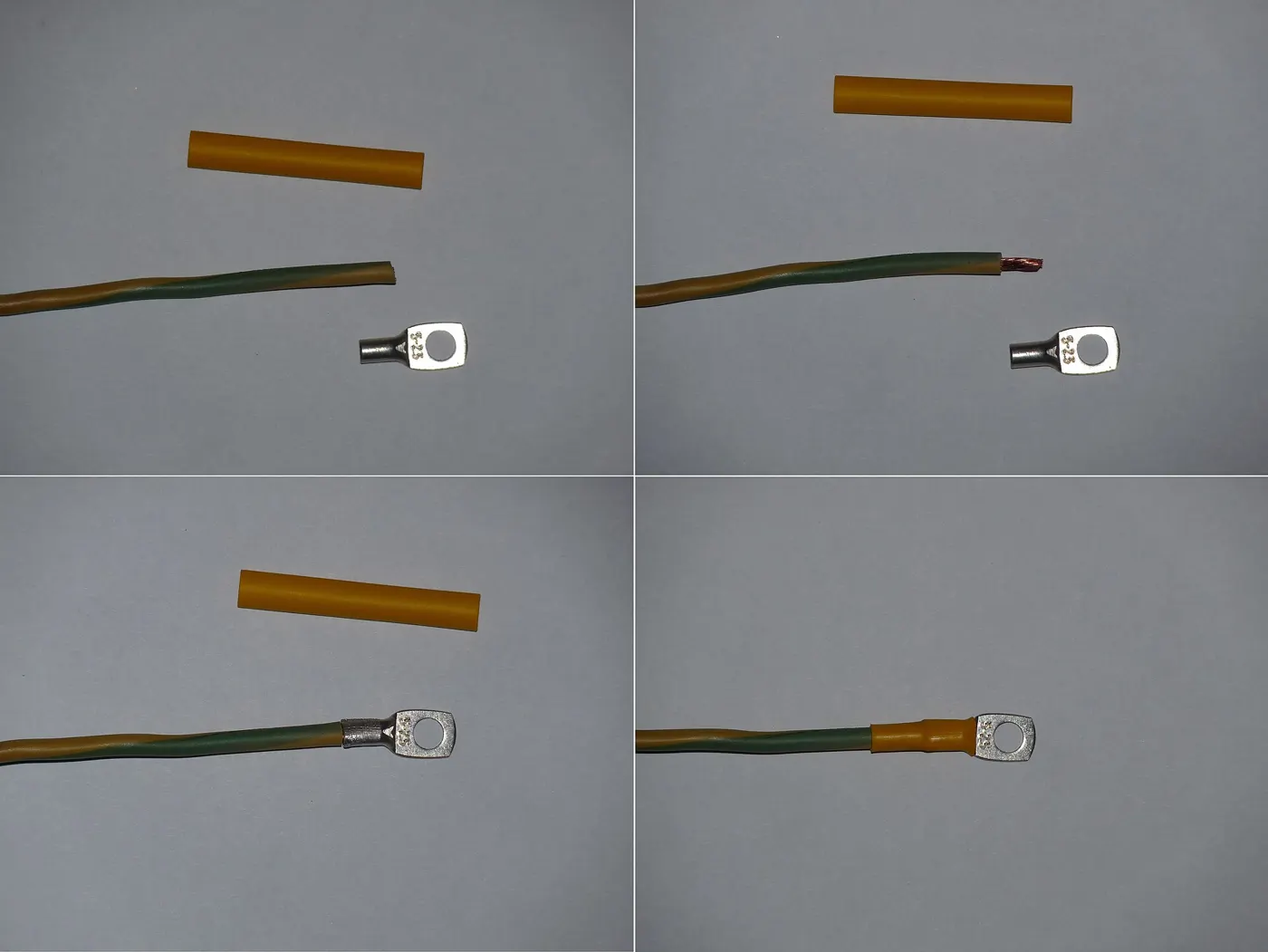
- Crimp cable lugs with the right tool for the cable size. Pull on the joint afterwards to test it.
- Use multi-strand automotive cable, which withstands vibration.
- Protect cables with grommets and conduit where they pass through metal.
- Label the cables and keep a wiring diagram.
- Test under load: no cable or connection should get warm.
You can do 12 volt work yourself. Under Swedish rules you do not need an electrician to install 230 V in a motorhome or campervan either; that requirement applies to buildings. 230 volts can still be lethal, so use an RCD and, ideally, have someone who knows electrics check the installation. Read more in the electrical system guide and in Elsäkerhetsverket’s information below.
Specifically for lithium batteries
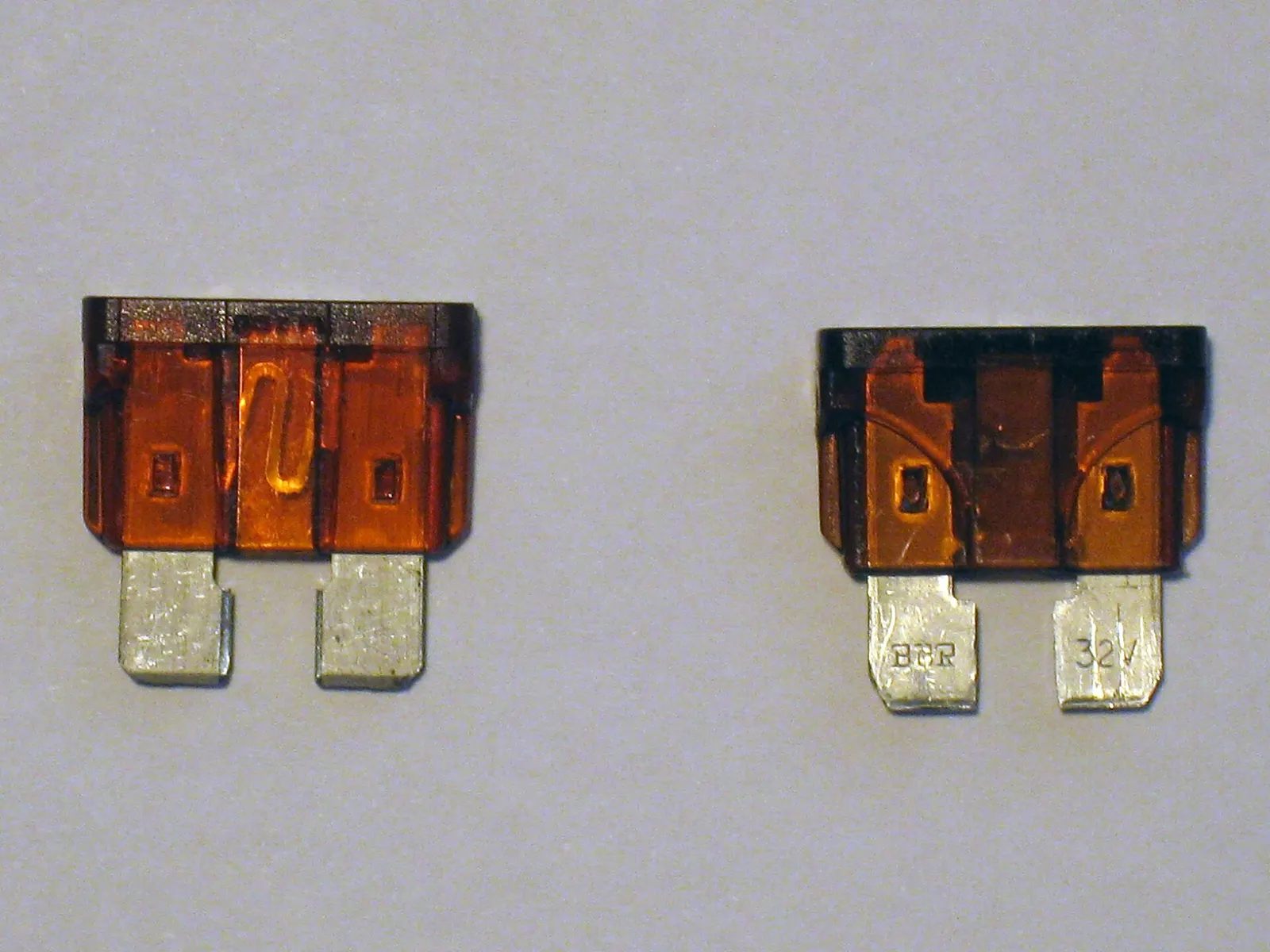
A lithium battery (LiFePO4) has a low internal resistance and can deliver a very large current in a short circuit. The main fuse must be able to break that current, and the battery’s BMS (the built-in management system) should not be the only protection. Read more in lithium or AGM in a motorhome.
Are the electrics part of a motorhome conversion? The rules guide covers inspection, weight and driving licences (Swedish rules).
Frequently asked questions
What cable size do I need for LED lights?
LED lighting draws little current, so 1.5 mm² (14 AWG) is enough in most campervans, even with a few metres of cable. Fuse the branch for the cable, often at 5–10 A.
Is cable length measured one way or there and back?
The formula counts both conductors, which is why it says 2 × length. The chart above starts from the distance one way and already includes both.
What happens if the cable is too thin?
The voltage drops at the load, so that the fridge, for example, switches off, and the cable gets warm. In a short circuit without the right fuse, it can catch fire.
What size fuse should I have?
The fuse should be somewhat larger than the load’s normal current but never larger than the cable can carry. The cable decides the highest permitted fuse.
How do you calculate cable size for 12 volts?
Area in mm² = 2 × the length one way in metres × the current in amps × 0.0175 ÷ the permitted voltage drop in volts. For 3% in a 12 volt system, the voltage drop is 0.36 V.
Where should the fuse go?
As close to the battery or power source as possible, normally right at the positive terminal.
What cable does a B2B charger need?
It depends on the charger’s current and the distance to the starter battery. We play it safe: a 30 A charger with 4 metres (13 ft) of cable one way should have 35 mm² (1 AWG) (no more than 0.15 V voltage drop). With a 3% voltage drop, 16 mm² (4 AWG) is enough, but we round up for safety and for efficient charging. Also follow the manufacturer’s instructions.
Sources
- Elsäkerhetsverket (the Swedish National Electrical Safety Board), Säker el på semestern (in Swedish; “Safe electricity on holiday”). English overview: Electrical safety in Sweden.
- Camperliv, Campervan electrical system
- Camperliv, B2B chargers and smart alternators
Last checked: October 2026. Always follow the manufacturer’s instructions for cable, fuses, batteries and chargers.
New checklists and guides, plus reminders before winter storage and inspection. A few emails a year, nothing more.
The content is based on my own experience and the rules that applied when the text was written. Rules can change, and I am not responsible for factual errors or rule changes that affect your build or maintenance. Read the full disclaimer.

Linus Thell
Founder of Camperliv.se. Has worked with vehicles for essentially all of his adult life.
Read more about Linus →