Contents of the guide Show ▾
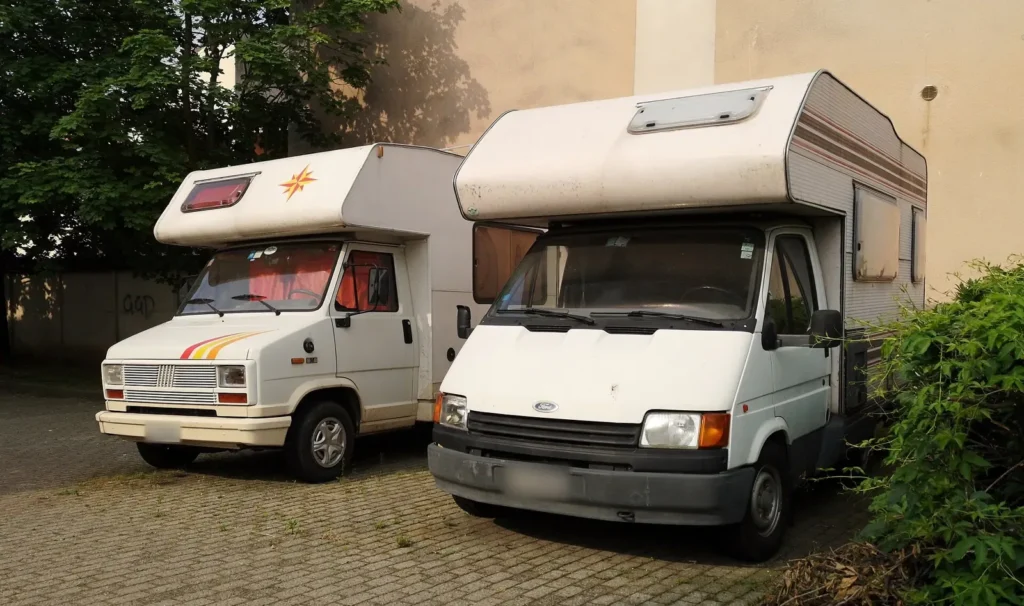
Quick answer When you buy a used panel-van conversion (a plåtis in Swedish), you are buying two things at once: a van and a small house. So check both. Start with the paperwork (registration as a passenger car class II, gross vehicle weight, debts and inspection), then look for rust and damp, and finally test-drive the van from cold and warm. If you find deep structural rust, damp in the living area or papers that don’t match the vehicle, negotiate hard or walk away.
This guide follows the same order as a professional pre-purchase inspection: first the things that can stop the deal straight away, then the things that cost most to fix. Further down are red flags for the most common base vehicles and answers to the questions people ask most often.
The most expensive mistake when buying a used campervan is falling in love with the interior and forgetting the base vehicle. Cabinetry can be rebuilt over a weekend, but deep rust in the chassis members, an engine with neglected emissions control or papers that don’t add up can cost more than the whole living area is worth. That’s why this checklist starts underneath and with the paperwork, not with the curtains.
Checklist as PDF: Used campervan buying checklist (in Swedish). All checklists
The essentials at a glance
- Paperwork first: in Sweden, use the Fordonsuppgifter (vehicle information) e-service from Transportstyrelsen (the Swedish Transport Agency) to check that the van has passed its inspection, has no driving or usage ban, and that the seller is the registered owner.
- Registration: is the van registered as a passenger car class II (motorhome) or still as a goods vehicle? It affects tax, insurance and whether you need to have it inspected for re-registration.
- Gross vehicle weight: on a category B licence the gross vehicle weight may be at most 3,500 kg (7,716 lb). Payload is the gross vehicle weight minus the mass in running order.
- Rust and damp are the most expensive surprises. Look under the van and measure damp in the living area.
- Test-drive from a cold start for at least half an hour, both in town and on open roads.
- If you buy privately, Swedish law applies the Sale of Goods Act (köplagen), not the Consumer Sales Act (konsumentköplagen). Always write a contract of sale.
Before the viewing: what to check from home
You do most of the sorting before you even sit in the van. It saves time and means you arrive at the viewing with the right questions.
Before the viewing
- Look up the registration number in Transportstyrelsen’s Fordonsuppgifter e-service: inspection, driving bans, whether the vehicle is in use or off the road, vehicle type and vehicle tax.
- Ask the seller about vehicle-related debts and ask to see the details from the Fordonets skulder (vehicle debts) e-service.
- Ask whether there is a loan on the van. An unsettled loan can give the lender the right to take the vehicle.
- Ask for photos of the registration document (gross vehicle weight and mass in running order), the service book and the latest inspection report.
- Compare the mileage in the advert with the one in the inspection history.
- Ask the seller to leave the van cold before the viewing so that you can start it from cold yourself.
Tip Call the seller before you set off and ask straight out when the timing belt was changed, whether the van has had a damp test and what servicing has been done. How the seller answers often says as much as the answers themselves.
Body and rust: start underneath
Rust is the fault that most often makes a panel-van conversion not worth saving. Surface rust on an older chassis is normal. What should make you stop is rust that flakes, bubbles under the paint or has gone through, especially in load-bearing parts.
Body and rust
- Bring a torch and something to lie on. Look at the frame, the chassis members, the sills and the wheel arches.
- Check the door edges, the sliding door rail and the bottom edge of the rear doors.
- Look around every hole cut in the body: windows, roof hatches, fans and cable entries. Cut edges that were never rust-proofed rust from the inside.
- Look for colour differences, filler and fresh underbody coating in isolated spots. It can hide repairs.
- Tap carefully on suspect areas. If it sounds hollow or the metal gives, that’s a warning sign.
Where rust hides most often: the rear wheel arches and wing edges, the sills and the bottom edge of the sliding and rear doors, the floor under the cab, the area around the entry step, the mounts for the leaf springs and rear axle, the inside of the chassis members and joints where conversion parts or extra equipment have been bolted on. Shine a torch, look into the drain holes and compare with a van of the same age. Surface rust that brushes off is maintenance. Rust that flakes in layers, bubbles under the paint or can be poked through is a repair, and on load-bearing parts an inspection failure.
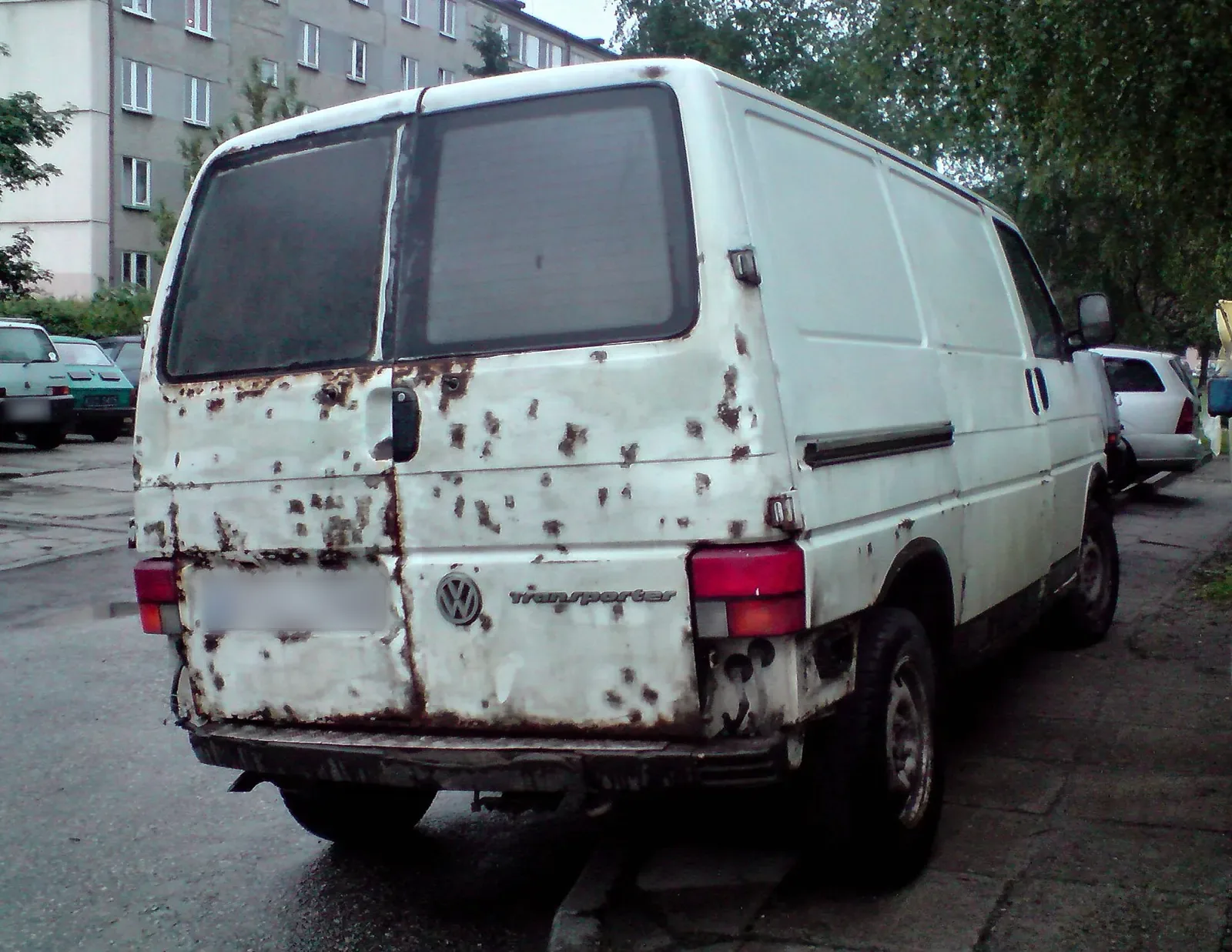
Common mistake Settling for a look at the paint. Freshly applied underbody coating on an older van can be good maintenance, but it can also hide rust. Ask when and where it was applied.
Engine and drivetrain
Almost all panel-van conversions run on diesel and have emissions control that suffers from short trips and long periods standing still. A motorhome that has stood a lot can therefore have different faults from a work van that has covered long distances.
Engine and drivetrain
- Start it from cold yourself. Listen for rattles in the first few seconds and watch for smoke.
- Find out whether the engine has a timing belt or chain and when it was last changed according to the service book or a receipt. On a motorhome that does few miles it is often age, not mileage, that decides when to change it.
- Look for oil leaks under the engine and gearbox, and for damp around the turbo and hoses.
- Check that the engine warning light goes out after starting. Ask to have the fault codes read if you can.
- Ask whether the particulate filter, EGR and AdBlue (on newer vans) have had work done, and ask for receipts.
- Feel the clutch: where it bites, whether it slips in higher gears, and whether there is a rattle at idle that disappears when you press the clutch.
Symptoms to listen for: an engine warning light or particulate filter warning, the van going into limp mode with low power, black smoke under acceleration, an uneven idle, and the fan running for a long time after switching off (can indicate a regeneration in progress). On vans with AdBlue, watch out for warnings such as “no start possible in X km” and fault messages about the AdBlue system. Ask for a fault code read-out before buying and ask whether the filter has been cleaned or replaced. The cost of fixing it varies a lot between cleaning and replacement, so get a quote from a mechanic before you do the sums on the deal.
Chassis, brakes and tyres
Chassis, brakes and tyres
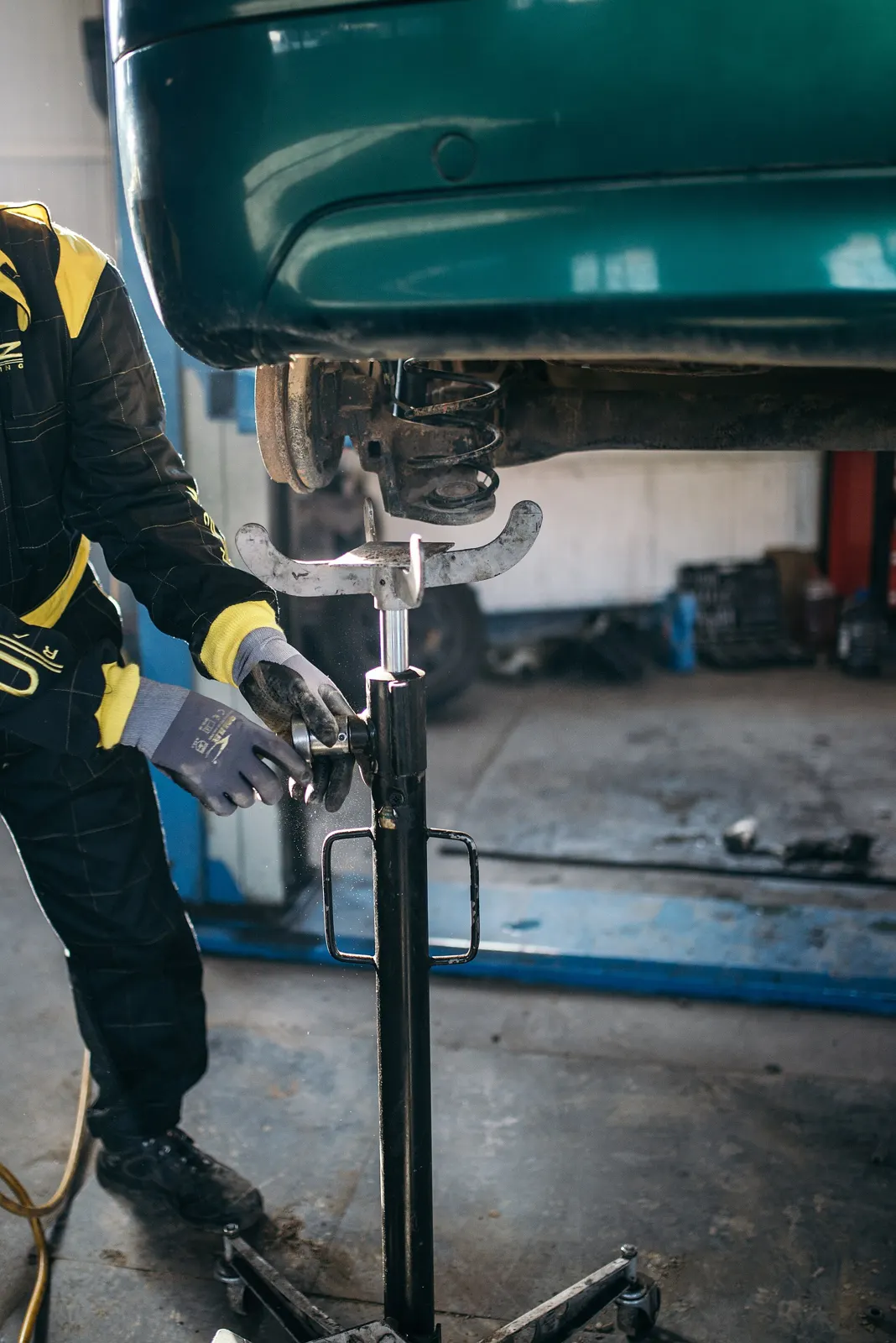
- Read the tyres’ DOT code (four digits: week and year). Old tyres can look fine but have hard rubber.
- Check the tread depth. Under Swedish rules, in winter road conditions vehicles up to 3.5 tonnes (7,716 lb) need winter tyres with at least 3 mm (about 4/32 in) of tread, and motorhomes (passenger car class II) over 3.5 tonnes need at least 5 mm (about 6/32 in). Summer tyres must have at least 1.6 mm (2/32 in).
- Look for rusty or scored brake discs. Vans that stand still often get rust on the discs and sticking brake callipers.
- Check for uneven tyre wear. It can indicate wrong wheel alignment or worn parts in the front suspension.
- Look at the shock absorbers and springs. Leaking dampers and a van that leans to one side are common on heavily loaded conversions.
Legal requirement (Sweden) In winter road conditions from 1 December to 31 March, passenger cars and light vehicles up to 3.5 tonnes must have winter tyres with at least 3 mm (about 4/32 in) of tread. For passenger car class II (motorhome) over 3.5 tonnes the requirement is at least 5 mm (about 6/32 in). Source: Transportstyrelsen, TSFS 2009:19 section 5 as amended by TSFS 2025:68 (in Swedish). More in winter tyre rules for motorhomes (in Swedish).
Vehicle and leisure electrics
A panel-van conversion has two electrical systems: the vehicle’s own and the living area’s 12 volt, sometimes with 230 volts via mains hook-up or an inverter. Self-built systems vary a lot in quality.
Vehicle and leisure electrics
- Ask which leisure battery is fitted, how old it is and how it is charged (alternator, B2B charger, solar panel, mains hook-up).
- Look at the wiring: are there fuses close to the battery, and are the cables secured and protected where they pass through metal?
- Test all lights, sockets, the pump, the fridge and the heater on battery power.
- Plug in mains hook-up if possible and check that the charger and the RCD work.
- Ask who built the electrical system and whether there is a wiring diagram.
Common faults in self-built electrics: cables too thin for the current, no fuse close to the battery’s positive terminal, cables with no grommet where they pass through metal, loose cable lugs, batteries that aren’t strapped down, and 230 volts installed without an RCD. Under Swedish rules you do not need an electrician to install 230 V in a motorhome or campervan; that requirement applies to buildings. Ask the seller who installed the 230 volts and whether there is an RCD, and if in doubt have someone who knows electrics check it. Read more in our guide on B2B chargers and 12 volt in a campervan.
LPG, water and damp
Damp is the most expensive hidden damage in the living area, because it is often behind walls and floors before it shows. LPG is above all a safety issue.
LPG, water and damp
- Smell as you step in. A musty smell is a warning.
- Press on walls, the floor and the corners around windows and roof hatches. Soft areas indicate damp damage.
- Ask for a recent damp test, or have one done before the deal is closed. A moisture meter gives a first indication.
- Ask when the LPG system was last leak-tested and ask for the report. Look at the age and condition of the hoses.
- Run the water pump, open all taps and look for leaks under the sink and at the tanks.
Good to know about LPG (Sweden) For a private individual there is no specific legal requirement for periodic leak testing of the LPG in a motorhome. The authority still recommends regular checks, and a check to the EN 1949 standard is more thorough than a simple leak test. Sources: MSBFS 2020:1 (regulations from MSB, now MCF – Myndigheten för civilt försvar, the Swedish Civil Defence Agency; in Swedish) and SIS (the Swedish Institute for Standards). More in LPG in a campervan.
Interior and weight
A good-looking interior is easy to fall in love with, but what matters is how it is fixed and what it weighs. Loose furniture becomes projectiles in a crash, and heavy builds eat up the payload.
Interior and weight
- Pull on cupboards, the bed and benches. Are they screwed into the body or only into the floor panel?
- Check that every seat you want to use while driving has a seat belt and is approved for it.
- Work out the payload: gross vehicle weight minus mass in running order according to the registration document. If the van was converted after it was weighed, the mass in running order may no longer be right.
- Ask for a recent weighbridge ticket, or weigh the van yourself on a public weighbridge before buying.
With the weight calculator you can add up the van, water, people and luggage and see how close to the gross vehicle weight you end up.
What usually weighs most in a converted van is solid timber boards and cabinetry, a full water system (one litre of water weighs one kilogram, about 8.3 lb per US gallon), batteries, LPG cylinders, extra seats and a roof box or bike rack. The mass in running order on the registration document often applies to the van before it was converted, so never assume it is right for a converted van. Weigh it and compare with the gross vehicle weight and permitted axle loads. More in the guide weight and axle loads on a motorhome (in Swedish).
Paperwork, inspection and registration
This is where you find out whether the van legally is what you think you are buying. Two questions matter most: how the van is registered and what it may weigh.
Passenger car class II or goods vehicle?
In Sweden a motorhome is usually registered as a passenger car class II. According to Transportstyrelsen, it must then be permanently fitted out as living accommodation with at least fixed seats, fixed sleeping places, fixed equipment for cooking and storage, and a table. A motorhome can also be registered as a goods vehicle, and then different rules apply to the driving licence, equipment, tax and fees.
If a converted van is still registered as a goods vehicle, it has to pass a registration inspection if you want it re-registered. How that works is described in the guide registering a campervan as a passenger car class II.
Gross vehicle weight and driving licence
On a Swedish category B licence you may drive a passenger car with a gross vehicle weight of at most 3,500 kg (7,716 lb). If the motorhome weighs more, you need C1 or C. Anyone who passed their category B licence before 1 July 1996 may drive a passenger car over 3,500 kg, provided the entitlement has not been revoked after that date.
Legal requirement (Sweden) A usage ban because of unpaid vehicle-related debts follows the vehicle to the new owner, even if it was the previous owner who didn’t pay. Source: Transportstyrelsen.
Paperwork and registration
- Vehicle type on the registration document: passenger car class II or goods vehicle.
- Gross vehicle weight, mass in running order and payload, and that the gross vehicle weight suits your licence.
- That the seller is the registered owner and has the most recently issued registration document.
- Inspection status and any remarks in the latest report.
- Service book, and receipts for the timing belt, brakes and emissions control.
- Certificates for retrofitted seats, the LPG installation and anything else the inspection may ask about.
Paperwork that is often missing: the report from the registration inspection when the van became a motorhome, certificates or documentation for retrofitted seats and seat belts, an LPG test report, a receipt for the timing belt change and a weighbridge ticket after the conversion. If the documentation for the seats is missing, the van may need to be re-inspected, and then it is the buyer who has to pay for the work. Check the registration document: is the van registered as a passenger car class 2?
The test drive
Test drive
- Drive for at least half an hour, in town, on open roads and preferably up a hill.
- Listen for noises from the front suspension and wheel bearings in bends and from the gearbox when changing gear.
- Brake hard in a safe place. The van should stay straight and the pedal should feel firm.
- Feel that the van pulls evenly and doesn’t lose power on uphill stretches.
- After the drive, check that no warning lights have come on and that nothing is dripping under the van.
Tip Have a mechanic you trust inspect the van on a lift before you pay. If the seller refuses, that’s a red flag in itself.
Negotiate and close the deal
Every fault you find is a negotiating point. Get a price from a mechanic for what needs doing and use it in the discussion instead of guessing.
- Write a contract of sale in two copies, with the vehicle’s condition, mileage, equipment, price and payment. Konsumentverket (the Swedish Consumer Agency) has a template.
- If you buy privately in Sweden, the Sale of Goods Act applies. You have no right of withdrawal, and you cannot complain about faults you should have discovered in a careful examination.
- If you buy from a dealer, the Consumer Sales Act applies, which gives stronger protection.
- Take out motor insurance from the day ownership changes.
Pre-purchase inspection: ask an independent garage for a price for an inspection on a lift with a fault code read-out. It costs a fraction of a single hidden repair. Write into the contract of sale that the van is sold with the information the seller has given about the timing belt change, rust-proofing and damp test, that there are no known faults or damage beyond what is stated, and which accessories are included (charger, batteries, LPG cylinders). Konsumentverket (in Swedish) has a good contract of sale to start from.
Red flags by base vehicle
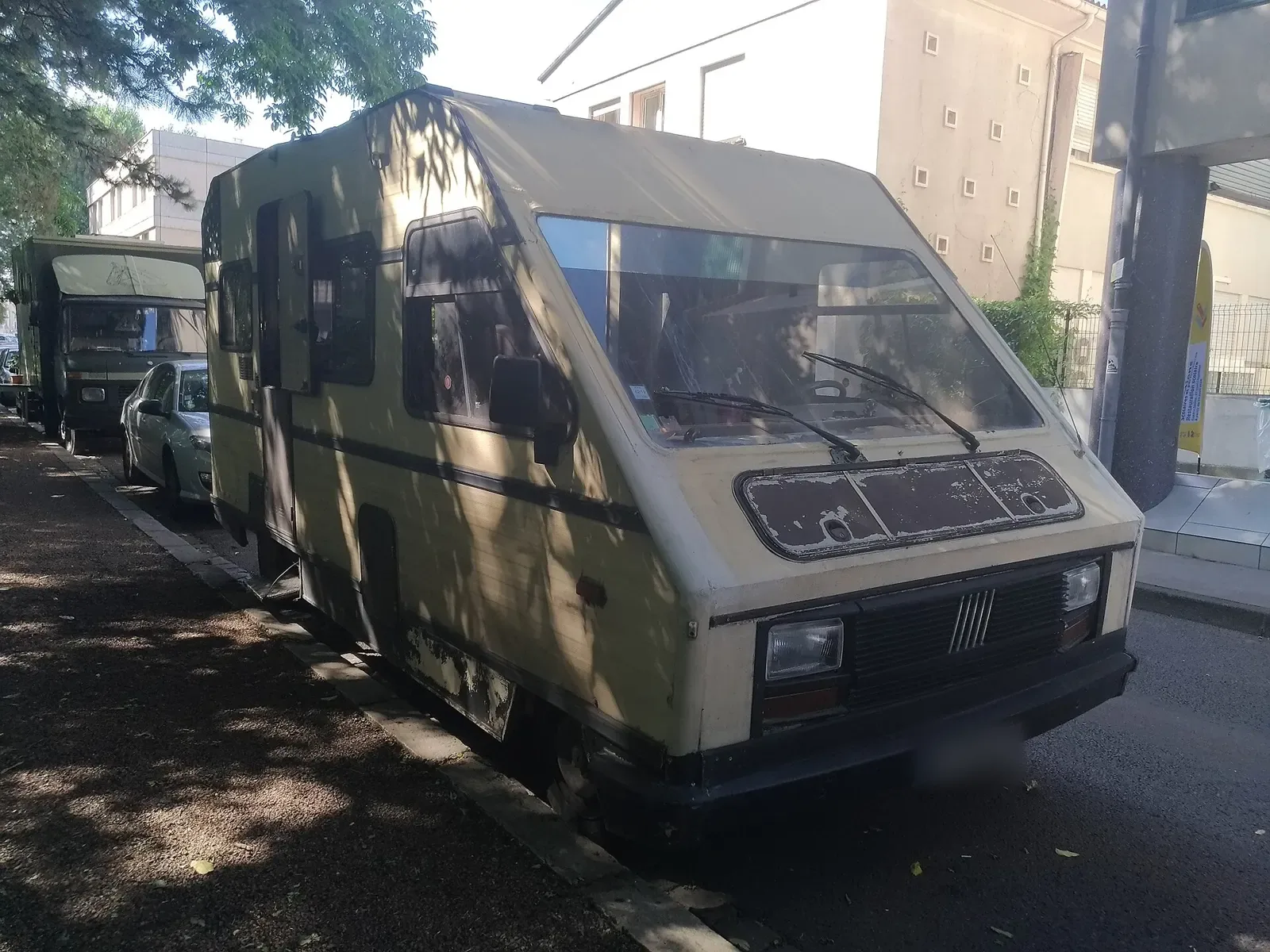
Most panel-van conversions in Sweden are built on a handful of base vehicles. They all have their known weaknesses. Always check which engine generation the van has, because the faults differ between model years.
Fiat Ducato (and Peugeot Boxer, Citroën Jumper)
The most common base vehicle for motorhomes. The 2.3 Multijet has a timing belt. Check when it was changed and follow the service book. Ask about the EGR and particulate filter, and look extra carefully for rust in the sills and rear parts of the chassis.
Ford Transit
The engine options differ a lot. On some newer diesel engines the timing belt runs in oil, and then it is especially important that the right oil has been used and the servicing done on time. Ask for the service history. More in Ford Transit: common faults.
Mercedes-Benz Sprinter
Often high mileage from a previous working life. Rust in the sills, wheel arches and hidden body parts is what most often needs checking carefully, especially on older generations. More in Mercedes Sprinter: common faults.
VW Crafter and Renault Master
The emissions control (EGR and particulate filter) is sensitive to short trips. Ask about regeneration problems and fault codes and ask for receipts for any work done.
The Ducato is the most common base vehicle among Swedish panel-van conversions. That’s why we have a separate guide on common Fiat Ducato faults with timing belt intervals, EGR, particulate filter and rust zones.
Want to compare base vehicles before you start looking? Read choosing a base vehicle for a campervan.
Take the checklist to the viewing
All the points above are collected on the used van checklist page, which you can open on your phone when you are standing next to the van.
Read also: how a damp test works and motorhome rules.
Frequently asked questions
What should I think about when buying a used campervan?
Check the paperwork first (owner, inspection, debts, registration and gross vehicle weight), then look for rust and damp, and test-drive the van from a cold start. Ideally, have a mechanic inspect the van on a lift before buying.
What gross vehicle weight can a motorhome have on a category B licence?
Under Swedish rules, at most 3,500 kg (7,716 lb). Heavier motorhomes need C1 or C, unless you passed your category B licence before 1 July 1996 and the entitlement has not been revoked since.
What is the difference between a passenger car class II and a goods vehicle?
A passenger car class II is a vehicle permanently fitted out as living accommodation with fixed seats and sleeping places, cooking and a table. A motorhome can also be registered as a goods vehicle, and then different rules apply to the driving licence, equipment, tax and fees.
Does a converted van have to pass a registration inspection?
In Sweden, yes: if it is to be changed from a goods vehicle to a passenger car class II, a registration inspection is required. Read more in our guide on re-registration.
How do I check whether the van has debts?
In Sweden, look up the registration number in Transportstyrelsen’s Fordonsuppgifter e-service to see any usage ban. Ask the seller to show the details from the Fordonets skulder e-service, or call Transportstyrelsen.
What rights do I have if I buy from a private seller?
In Sweden the Sale of Goods Act applies. You have no right of withdrawal, but you can complain about faults within two years if the fault is not something you should have discovered in a careful examination. Always write a contract of sale.
Is an LPG test a legal requirement in a motorhome?
In Sweden there is no specific legal requirement for private individuals to have periodic leak tests, but regular checks are recommended and an obvious question when buying.
Do I need a damp test before buying?
It isn’t a requirement, but damp damage is among the most expensive hidden faults in a motorhome. Ask for a recent report or have a test done before the deal is closed.
Sources
- Transportstyrelsen, Passenger car (passenger car class II) (in Swedish)
- Transportstyrelsen, B, passenger car and light goods vehicle (in Swedish)
- Transportstyrelsen, Buying a vehicle (in Swedish)
- Transportstyrelsen, Usage ban (in Swedish)
New checklists and guides, plus reminders before winter storage and inspection. A few emails a year, nothing more.
The content is based on my own experience and the rules that applied when the text was written. Rules can change, and I am not responsible for factual errors or rule changes that affect your build or maintenance. Read the full disclaimer.

Linus Thell
Founder of Camperliv.se. Has worked with vehicles for essentially all of his adult life.
Read more about Linus →